By: Heath Wood
Deer Are Hungry
Throughout February, during my daily travels, I often notice a significant increase in the number of deer I encounter along the roadways and spread out through fields visible from the road. A few years ago, I noticed a significant increase in groups of deer in more areas during February and into the early part of March. Like clockwork, every February, every field I came across would often have ten to fifteen deer feeding in a herd. As I pondered why there is always a spike in deer numbers during the same time of year, I wondered if the deer group could be back into herds after breeding seasons or if there could be a spike in the deer herd. After seeking answers, I found neither is the reason for the spike in numbers. By talking to other hunters and investigating my hunting properties, the honest answer was simply, deer are hungry.
Struggles of Winter
The Ozark hills of southern Missouri are slightly different from other parts of the Midwest that many hunters often envision when imagining excellent whitetail deer hunting. Where I live in southern Missouri, a deer’s primary source of natural food during the fall is grass and acorns, minus the few food plots that hunter’s plant during the summer and early fall. There are very few crop fields; instead, cattle farmers replace them with grazing pastures. The rest of the land is mainly made up of hardwood timber. Acorn trees and pastures make fabulous food for the deer. Yet, halfway through the winter, all the grasses in the pastures have been eaten to the ground by cattle, and freezing temperatures kill all remaining grass, leaving the ground bare until warmer weather arrives in the spring. As for acorn trees, most of the acorn crop falls to the ground during September, October, and early November. By now, most acorns have been snatched up by deer, turkeys, squirrels, and other small game. The remaining acorns still on the ground become rotten during December and January. No acorns other than the rotten ones mean no food for the deer.
Deer not only need food because they are hungry, but they also need a boost in nutrition during this period for many reasons. For bucks, a needed boost in nutrition is due to the recovery process after the rut that occurred a couple of months prior and the need for nutrients that affect antler growth beginning during the early spring. As for the does, they need nutrients as they are pregnant with fawns that will be born in the spring as well. While fawns remain in the womb, they soak up every nutrient they can from the does. Having a healthier deer herd requires supplemental feeding during the late winter months.
Feed Deer Properly
Supplemental feeding doesn’t mean throwing out a few corn bags for the deer to eat. Some foods are not easy for deer to digest during the winter, such as corn. It can be harmful to deer if they solely consume it alone or overeat it—instead, foods with high protein that are easily digestible are a must. Many hunters use protein pellets or blocks that are high in protein. I use Big, and J’s BB2 mixed in with corn. Feeds like BB2 are easily digestible. Total digestible nutrition containing high protein is ideal for supplemental feeding during the winter. It is easier on a deer’s stomach, plus the high protein promotes antler growth.

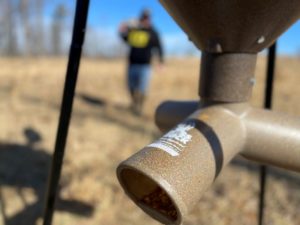
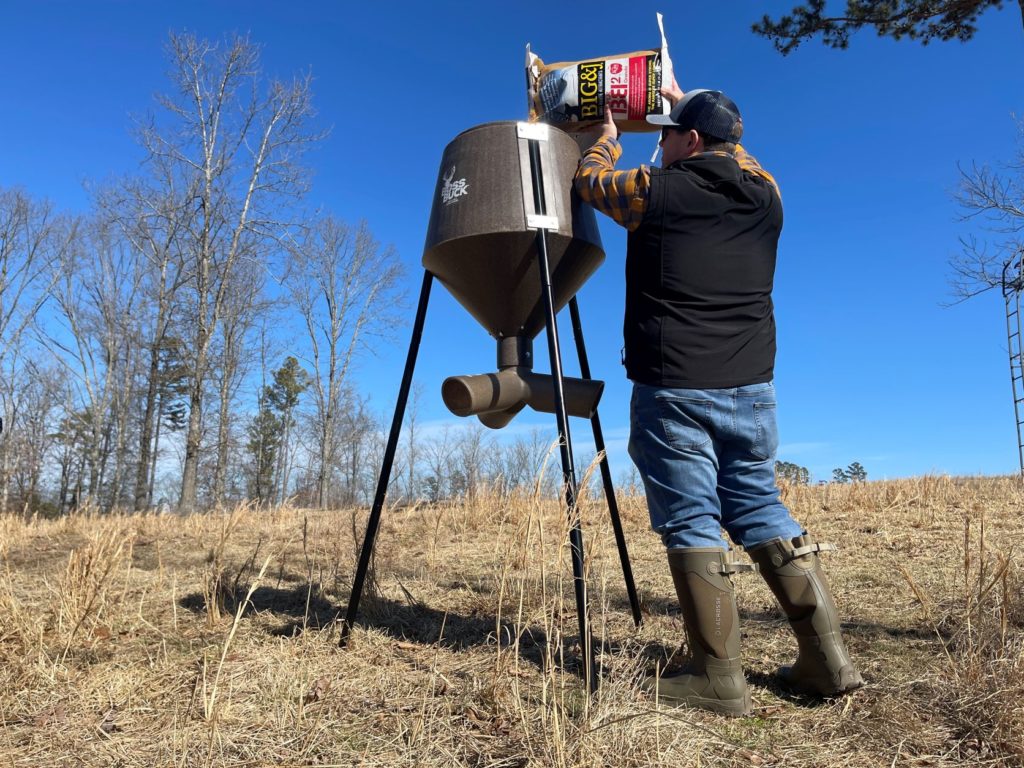
Properly distributing feed is also vital for maximum effectiveness when winter supplemental feeding. Food should never be poured on the bare ground for many reasons. Varmints such as raccoons, squirrels, and opossums have easy access to feed on the ground and consume it before deer have a chance at it. Winter weather, such as snow, can cover up access to food if placed directly on the ground as well. In recent years hunters have also cautiously paid attention to spreading deer out while eating instead of having them bunched together because of CWD. I use the Boss Buck 200 lb. Gravity-fed feeder to prevent the above-listed negative ways of feeding. The Boss Buck design features a maintenance-free patented hopper that allows feed to be evenly distributed in three-round ports. The three ports keep feed accessible without deer rubbing nose to nose with other deer while feeding. Also, unwanted critters have a more complicated and challenging time accessing food because of the round port design. And with small drain ports in each tube, feed always remains dry, no matter the weather conditions.
Monitor Deer Growth
I keep my Boss Buck 200 lb. feeder full of high-protein feed during winter supplemental feeding; I often use my Stealth Cam DS4K Ultimate game camera with my feeders. By having a game camera in place, I can monitor the overall health of my deer herd during the harshest times of the year and adjust accordingly to help acquire their winter nutritional needs.
Supplemental feeding during the winter can provide healthier fawns during the spring and bigger bucks the following fall and a healthy overall deer herd. If feeders are kept full using the proper feeds, deer are less stressed and consume the needed nutrients. With a little extra effort on our part, during a time when many deer hunters are not thinking of deer nutrition, we can help improve the entire head.